
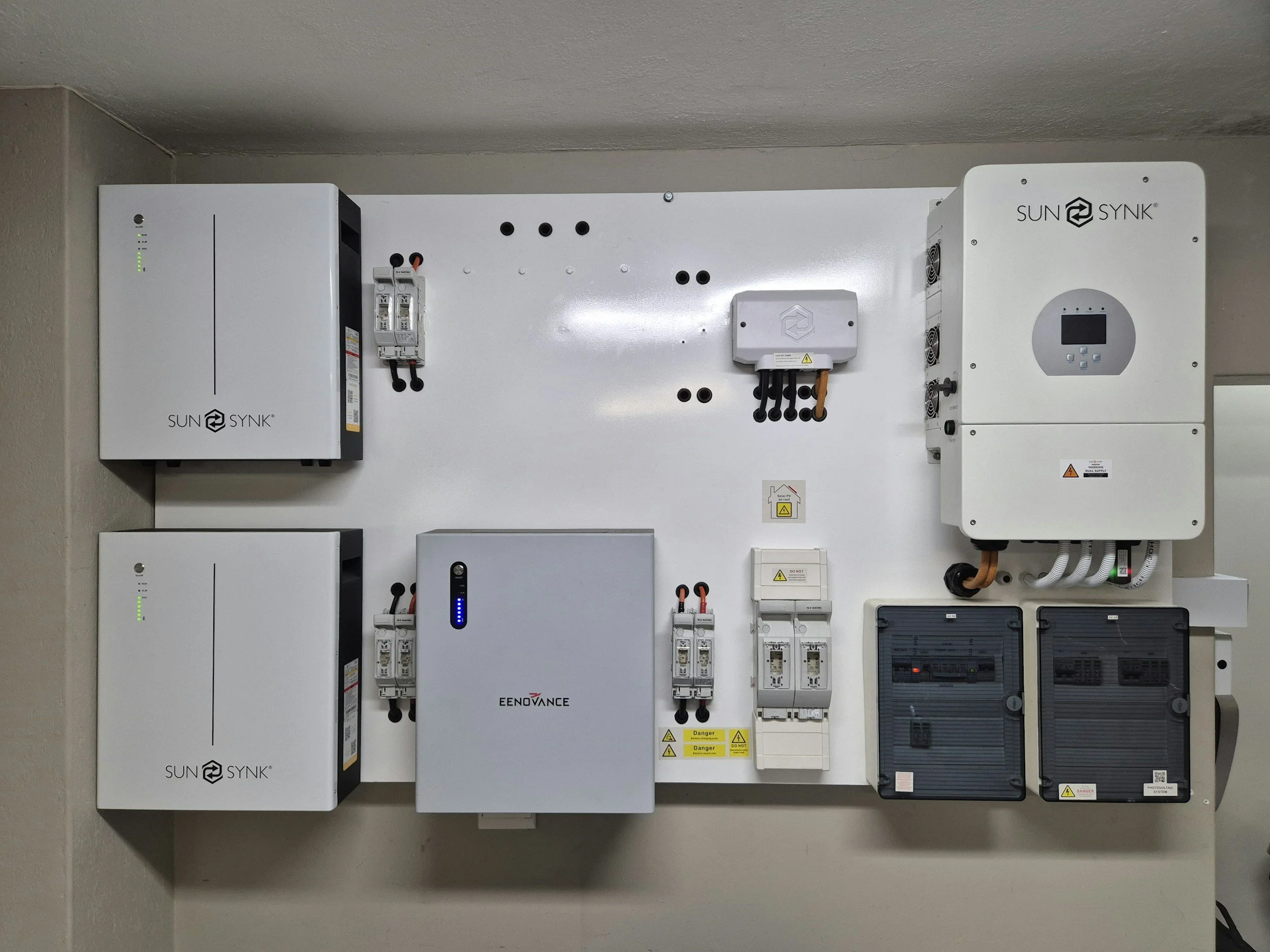
New Jersey homeowners pick backup power systems by answering three questions: what must stay on during an outage, how long outages last where they live, and whether they want fuel-free power from solar. For most Central NJ homes, the answer comes down to a solar battery, a standby generator, or a mix of both.
2026 made the case for home backup power in New Jersey loud and clear. A historic February blizzard knocked out power to about 330,000 customers statewide at its peak. Then storms on July 3 brought gusts up to 67 mph, and more than 200,000 JCP&L customers lost power. Some Monmouth, Morris, and Sussex County homes waited four days or more for the lights to come back on.
If you're done sitting in the dark, this guide walks through every backup power option, what each really costs you in convenience and upkeep, and how to choose the right fit for your home.
Home Backup Power Options for New Jersey Homeowners
Solar panels with battery storage
A solar battery stores clean energy from your panels and switches on automatically when the grid goes down. Many homeowners don't even notice the outage. During long outages, your solar panels recharge the battery every day, so you're not counting on fuel deliveries or gas stations. Batteries are quiet, need almost no maintenance, and can also lower your electric bill on a normal day.
Best for: Homeowners who want silent, automatic, fuel-free backup and long-term energy savings.
Standalone home battery (no solar)
A battery can be installed without solar and charged from the grid. It covers short outages well, but once it's drained, it can't recharge until power returns.
Best for: Short outages and essential circuits only.
Whole-home standby generator
A permanently installed generator runs on natural gas or propane and kicks on automatically through a transfer switch. It can power an entire home, including central air, as long as fuel lasts.
Best for: Large homes with high power needs and reliable natural gas service.
Trade-offs: Engine noise, yearly maintenance, fuel costs, emissions, and no savings on your monthly electric bill.
Portable generator
Portable generators are the cheapest upfront, but they require manual setup, gasoline storage, and careful placement outdoors to avoid carbon monoxide danger. They usually power only a few appliances.
Best for: Occasional, short outages on a tight budget.
Hybrid: solar battery plus generator
Some Central NJ homeowners pair a solar battery for daily use and quiet backup with a generator as a last resort during multi-day storms. It's the most resilient setup, and it's growing in popularity in heavily wooded JCP&L territory.
Solar Battery vs Generator: NJ Backup Power Comparison
When New Jersey homeowners compare a solar battery to a generator, the decision usually comes down to five things: how the system switches on, how it sounds, what it runs on, what it does for you on a normal day, and how much care it needs.
Switching on during an outage
A solar battery and a standby generator both switch on automatically. A battery takes over in a fraction of a second, so your lights, Wi-Fi, and refrigerator often never blink. A standby generator needs a few seconds to start and stabilize. A portable generator doesn't switch on at all until you drag it outside, fuel it up, and plug in extension cords or a manual transfer switch, often in the middle of a storm.
Noise and neighbors
Batteries are completely silent. Standby generators run like a lawn mower outside your window for as long as the outage lasts, and portable generators are even louder. In tight Central Jersey neighborhoods, that noise matters to you and to the people next door.
Fuel and long outages
A solar battery needs no fuel. Your panels recharge it every day, which is a big advantage when restoration stretches across several days. A standby generator runs on natural gas or propane and keeps going as long as the supply holds. A portable generator burns gasoline, which means storing fuel and refilling it every several hours.
Everyday value
This is where the gap gets wide. A solar battery works every single day, storing solar energy and cutting how much power you buy from the grid. A generator, standby or portable, does nothing for your monthly electric bill. It only earns its keep when the power is out.
Maintenance and lifespan
Batteries need little more than app monitoring and occasional software updates, and they typically last 10 to 15 years or more. Standby generators need annual service, oil changes, and regular test runs, and they can last 15 to 20 years with good care. Portable generators need frequent upkeep and often wear out in 5 to 10 years. Batteries also mount indoors on a garage or basement wall, while generators need an outdoor spot with safe clearance from windows.
How to Choose the Right Backup Power System for Your NJ Home
List your must-have loads. Start with the essentials: refrigerator, sump pump, well pump, furnace blower, Wi-Fi, medical equipment, and a few lights and outlets. Then decide if you want central air or an electric range covered too.
Pick partial-home or whole-home backup. Partial-home backup covers a dedicated circuit panel and needs a smaller system. Whole-home backup covers everything but needs more battery capacity or a larger generator.
Think about your outage history. JCP&L territory, with its heavy tree cover, often sees longer restorations than other parts of the state. If multi-day outages are common on your street, plan for recharging or refueling.
Check your roof and electrical panel. Solar batteries pair best with a solid roof and enough panel space. An older roof may need replacement before adding solar.
Compare everyday value, not just outage value. A generator only earns its keep during outages. A solar battery works every day, storing solar energy and reducing what you buy from the grid.
Plan space and placement. Batteries mount on a garage or basement wall. Generators need an outdoor pad with clearance from windows and property lines.
Choose an experienced local installer. Look for a New Jersey contractor who handles permits, utility paperwork, and roofing in-house.
Why Solar Battery Backup Makes Sense in New Jersey
New Jersey is one of the strongest states for pairing solar with battery storage. Here's why more Central NJ homeowners are choosing solar battery backup over generators.
Net metering still works in your favor
New Jersey utilities credit residential solar exports under net metering, and credits roll over month to month. The state Board of Public Utilities has been reviewing future net metering rules, so understanding today's terms before you install is smart. A battery adds flexibility, letting you store solar power for evenings and outages instead of sending it all to the grid.
A state battery program is on the way
In August 2026, the New Jersey Board of Public Utilities proposed the next phase of the Garden State Energy Storage Program. The proposal would open about 150 MW of storage statewide, including home batteries. Enrolled homeowners could earn annual payments over a 10-year term for letting their battery support the grid during heat waves and cold snaps. Final rules and payment amounts aren't set yet, so ask your installer how to stay ready to enroll.
Fuel-free resilience for long outages
When restoration takes days, a generator depends on fuel supply. A solar battery recharges every time the sun comes out, which is a real advantage in a long post-storm cleanup.
Installation, Permits, and Upkeep for Backup Power in NJ
Permits. Battery and standby generator installs need township construction and electrical permits. Solar plus storage also needs utility interconnection approval from PSE&G, JCP&L, or your local utility.
Timeline. Expect a few weeks to a couple of months from contract to power-on, depending on permits and utility approval.
Roof condition. Adding solar to power your battery? Make sure your roof has plenty of life left. Replacing an aging roof first saves you from paying to remove and reinstall panels later.
Maintenance. Batteries need little more than app monitoring and occasional software updates. Generators need yearly service, oil changes, and regular test runs.
Safety. Never run a portable generator in a garage or near open windows. Professionally installed systems include transfer equipment that keeps power from back-feeding into utility lines and endangering line crews.
Frequently Asked Questions About Home Backup Power in New Jersey
What is the best backup power for power outages in New Jersey?
It depends on your needs. Solar with battery storage is best for quiet, automatic, fuel-free backup that also lowers your bill. A standby generator suits large homes that want whole-home power for long stretches.
Can a solar battery power my whole house during an outage?
Yes, with enough battery capacity. Many homeowners choose partial-home backup for essentials, which keeps the system smaller and more affordable.
Do solar panels work during a power outage without a battery?
No. Grid-tied solar systems shut off during outages for line worker safety. A battery lets your solar keep powering your home.
How long will a home battery last during an outage?
It depends on battery size and what you run. Paired with solar, a battery can recharge daily and keep essentials running through multi-day outages.
Is a generator or a battery better for JCP&L outages?
Both work. Batteries switch over silently and recharge from solar, while generators need fuel. Many homeowners in wooded JCP&L areas choose a battery, or a battery plus generator for maximum resilience.
Can I add a battery to my existing solar system in NJ?
In most cases, yes. An installer will check your inverter, electrical panel, and roof to recommend the right battery.
Get Reliable Backup Power for Your Central New Jersey Home
The next nor'easter or summer storm is a matter of when, not if. Advisor Solar designs and installs solar and battery backup systems for Central New Jersey homes, and we handle roofing too, so your whole system is built to last.
Book a free backup power consultation. We'll look at your outage history, your must-have loads, and your roof, then recommend the right backup power system for your home and budget.
Schedule your free consultation or download our free Solar Savings Guide to see what solar plus storage could save you.